

Eden McCallum – Business Outlook and Consumer Surveys: Ways of working Q4 2025
A commitment to hybrid working remains firmly in place, albeit with some signs of a gradual pull back to the office. Eden McCallum’s business and consumer insights demonstrate that when it comes to ways of working, as memories of pandemic lockdowns fade, attitudes and practices are shifting subtly in different markets and businesses.
Our analysis draws on two Eden McCallum surveys conducted in the second half of 2025. The Business Outlook Survey provides a global view from senior business leaders on organisational approaches to office and remote working, while insights from a representative sample of office workers gathered in our Consumer Insights Survey in the UK and the Netherlands capture day-to-day experience and preferences.
Bringing these perspectives together surfaces some contrasts between policy, perception and reality, and tensions that may shape the next phase of hybrid working.
Hybrid is here to stay…
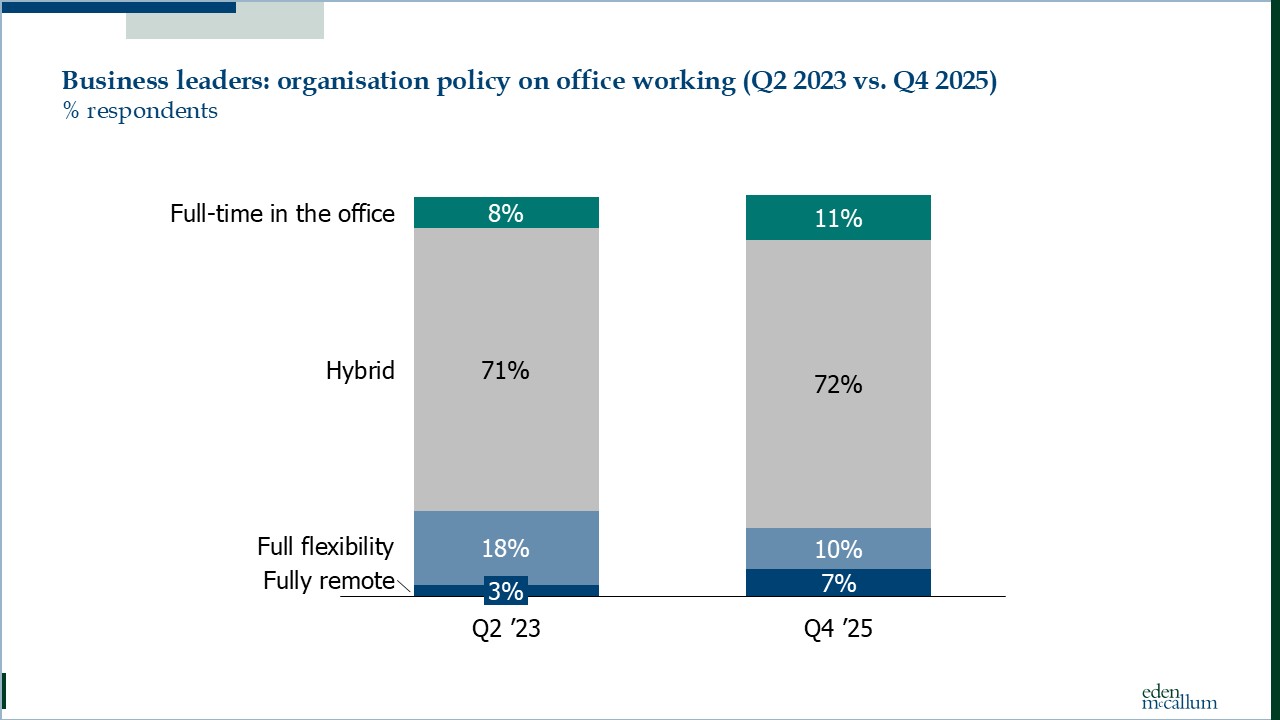
Seven out of ten organisations continue to follow a hybrid approach to office work, whether across the organisation or varying by team. But “full flexibility” has almost halved over the past two years and is now offered by only 10% of businesses compared with 18% in 2023.
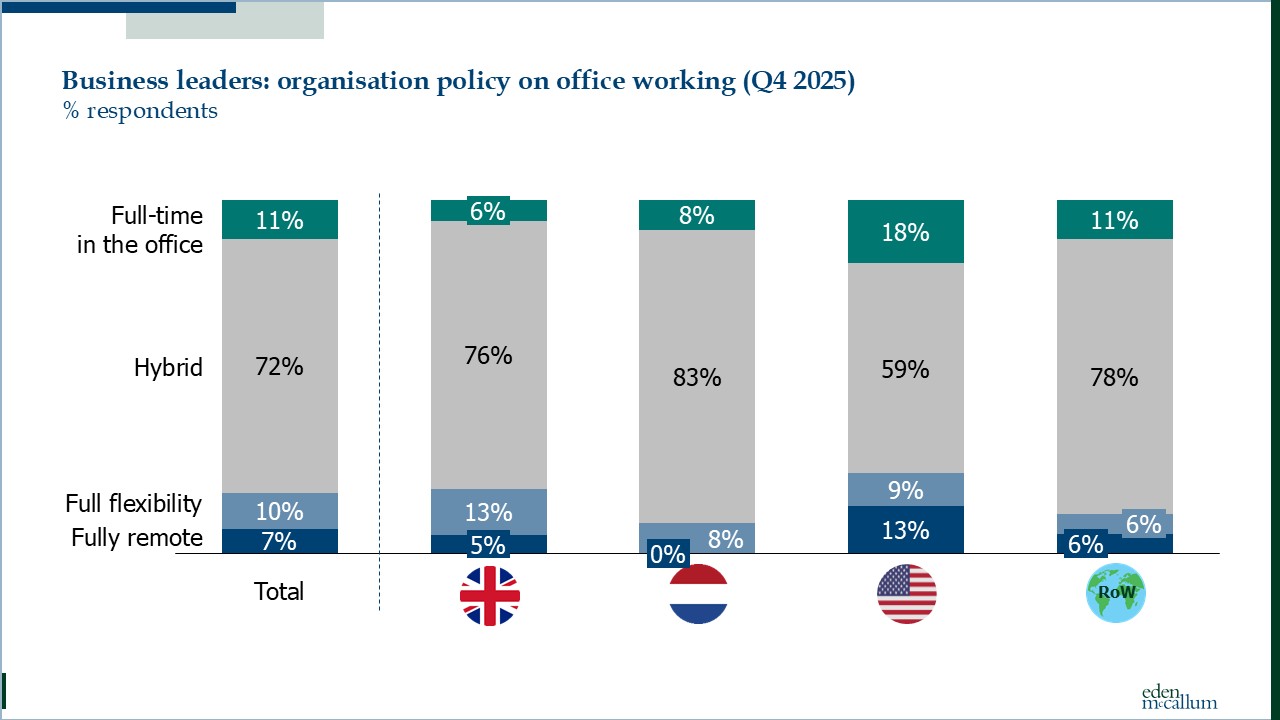
Dutch businesses seem the most committed to hybrid working, with 83% offering it, while in the US there is stronger commitment to the two opposite extreme options: 18% expect full-time employee presence in the office, and 13% offer fully remote working.
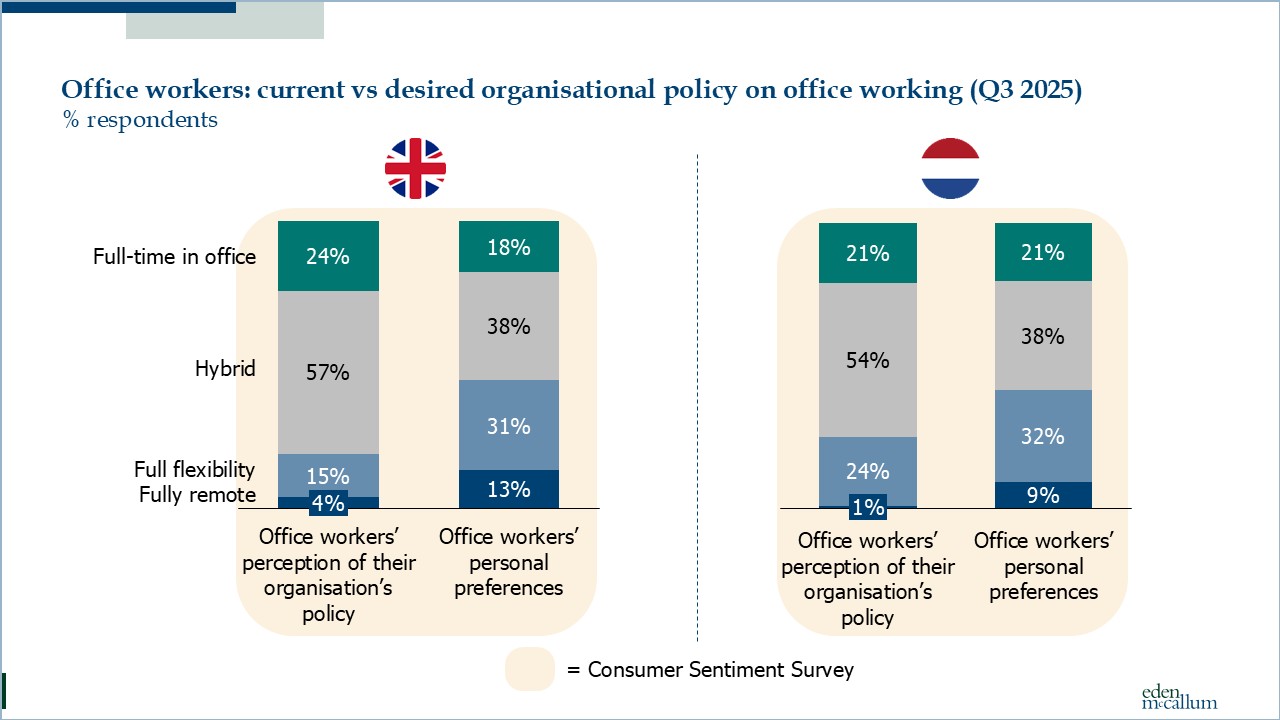
As these flexible ways of working mature, there are signs that a perception gap may be developing: while under 10% of UK and Dutch business leaders believe they are mandating full-time attendance in the office, almost a quarter of the office workers we surveyed think that full-time attendance is company policy. As to office workers’ preferences, there are mixed views, but the largest segment (over 30% in both the UK & NL) would like full flexibility to be on offer.
… though there are some signs of a gradual pull back to the office
As far as the average working week is concerned, two to three days in the office is still the most common option – 58% of businesses operate in this way, down from 69% two years ago. But more – 30% – are now pushing for four or five days attendance, almost double the rate found in 2023.
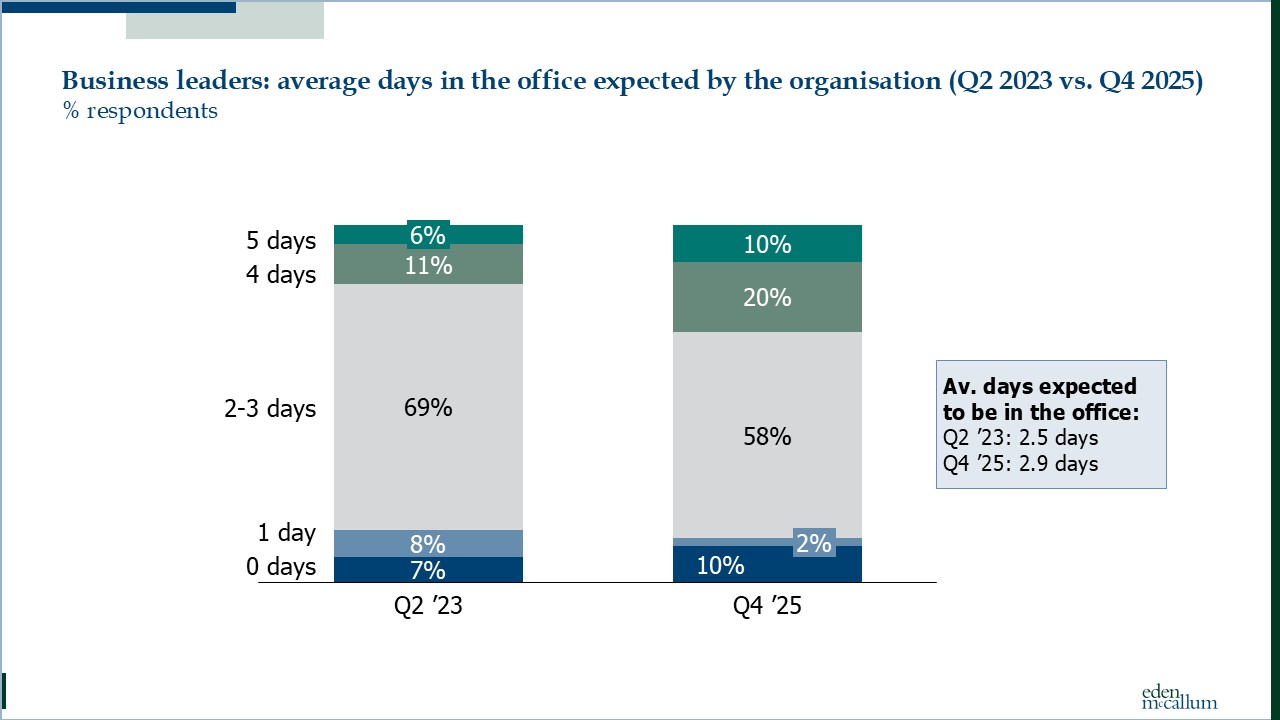
US businesses seem to emphasise attendance in the office a bit more firmly: around 40% have a four to five days a week in-the-office policy compared with 20% – 30% in Europe.
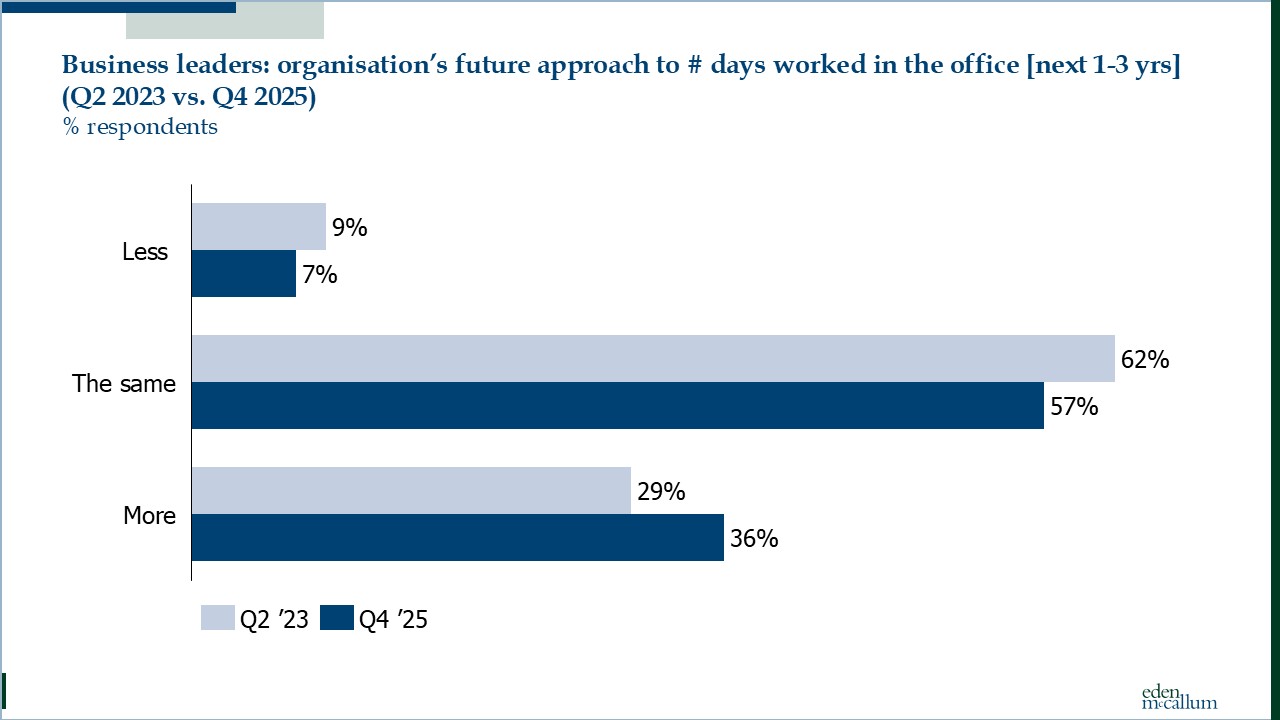
There are signs that, in general, some bosses do expect to see greater attendance in the office in the future: 36% say so, up from 29% two years ago. However, overall the majority of business leaders (57%) expect current attendance levels to continue unchanged (down marginally from 62% two years ago).
Your mileage may vary
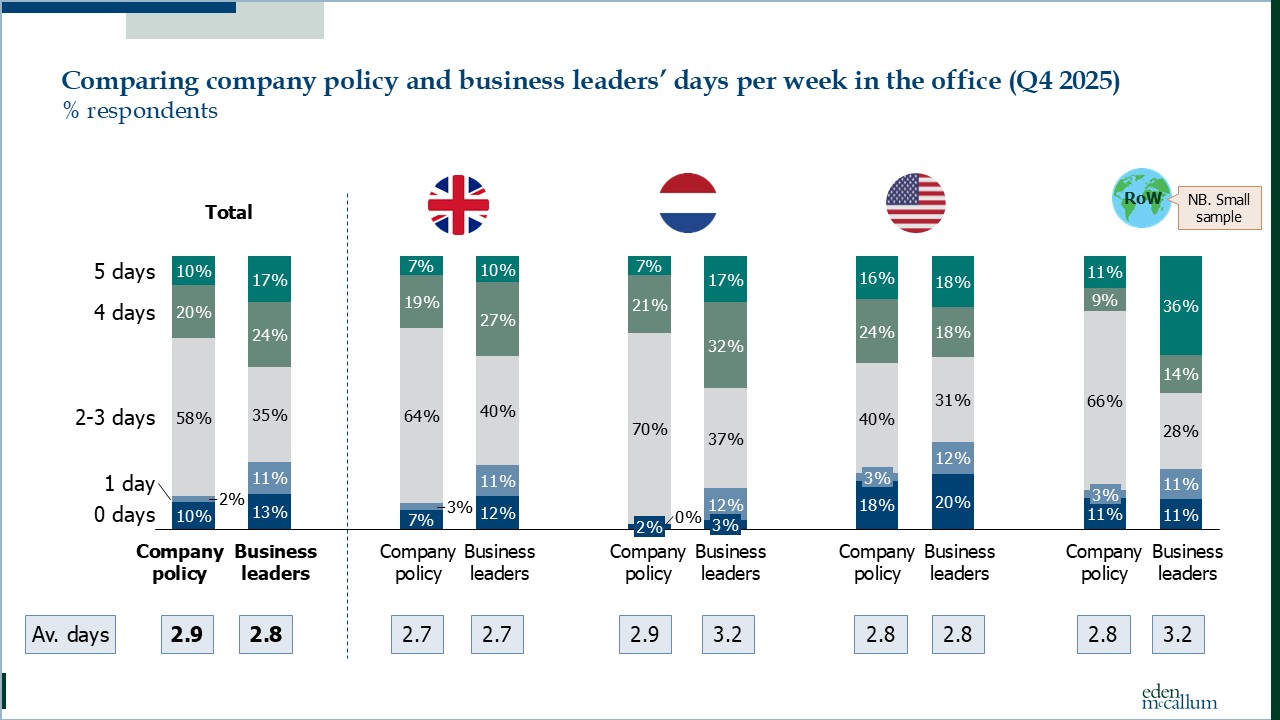
Leaders’ roles will necessarily require different working patterns to those displayed by other colleagues. Nonetheless, there is quite a contrast between company policy and leaders’ ways of working. While policies are mostly 2-3 days per week in the office, leaders’ working weeks tend to reveal a far more varied pattern: 40% are in four or five days a week, but another quarter are in only one day a week or are fully remote. Half of the Dutch leaders surveyed are in the office four of five days a week. A third of US leaders are in for one day only or are fully remote.
Permanent change
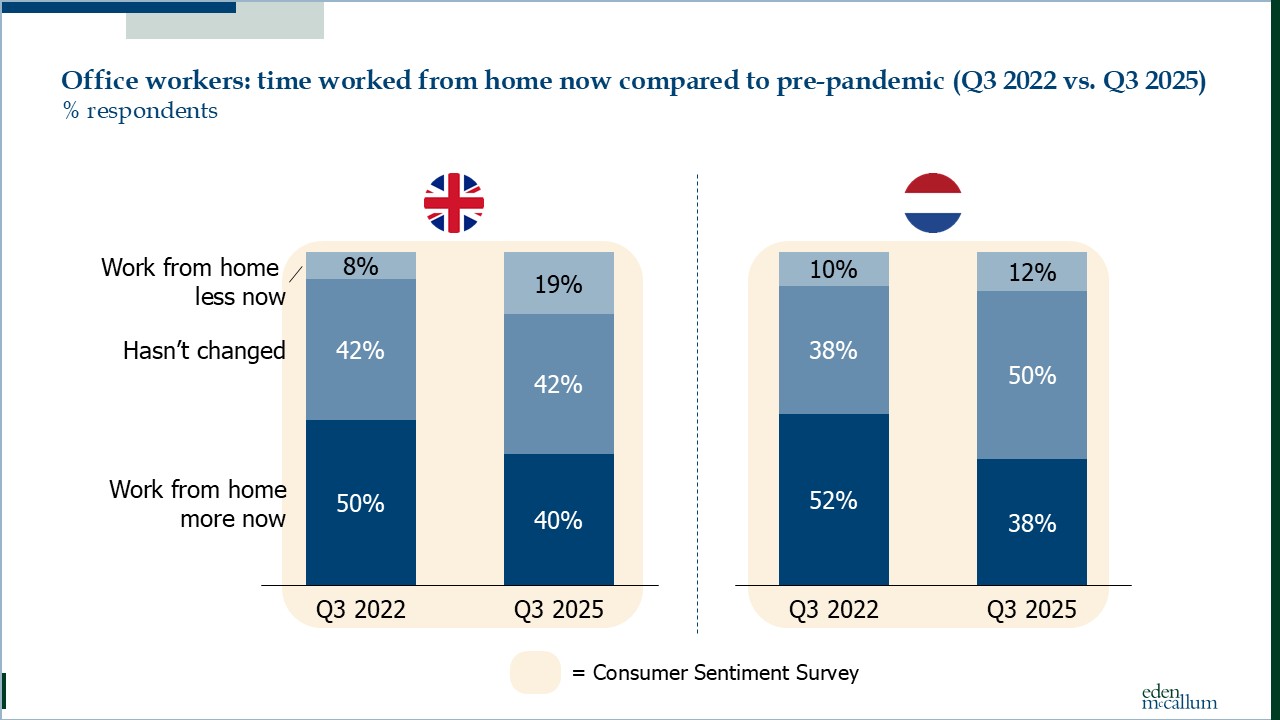
In both the UK and the Netherlands around 40% of office workers say they are now working from home more often than they did before the pandemic, although this percentage has fallen a little in both countries compared with 2022, when around 50% said they were working from home more.
It seems that the majority of businesses are broadly satisfied with the current approach. Over two thirds of business leaders are satisfied with their organisation’s current ways of working. They recognise that there can be productive flexibility and better balance in the workforce thanks to hybrid working. But concerns remain over barriers to teamwork and collaboration. “It works but we could optimise communications,” according to one UK boss.
Win-win?
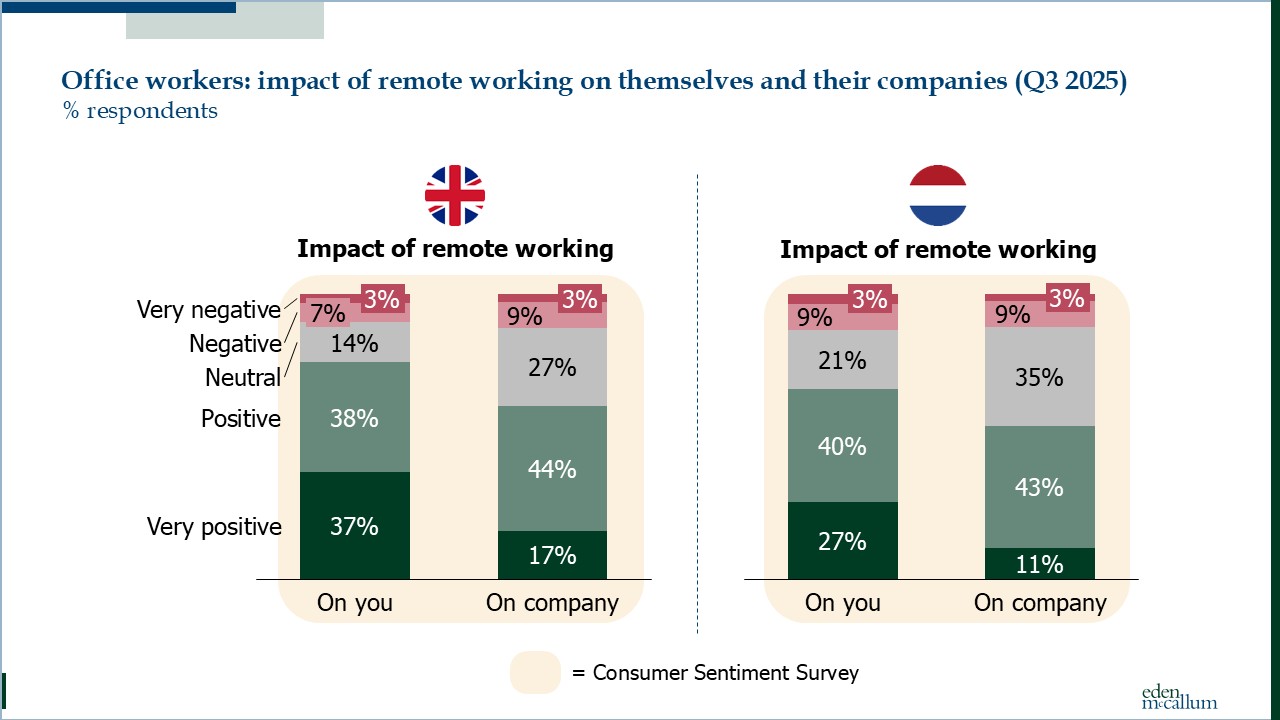
In both the UK and the Netherlands office workers recognise that they personally benefit more from remote working than their employers do, although few see any downside for the business in it. Employees say that saving time not having to commute is the main attraction of working at home. Flexibility of working hours is also important for many. The main drawbacks of working from home are the lack of social interaction and connections with colleagues.
Labour market moves
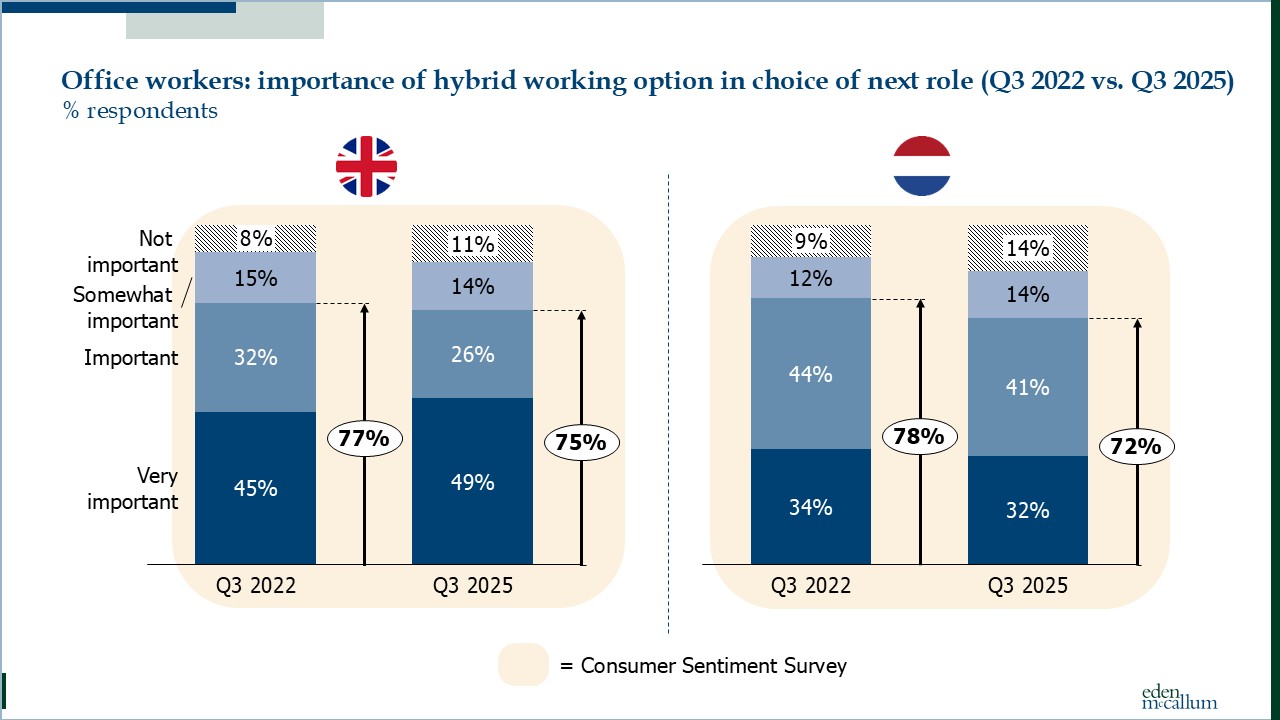
In both countries hybrid working continues to be an important factor for over seven in ten office workers considering their next role. And 65% of UK workers would be prepared to work anywhere in the country if hybrid working remained an option; just under half of Dutch workers feel the same way.
Dena McCallum, co-founder of Eden McCallum, says that a hybrid approach is now firmly established as a “new normal” in the workplace. While there is a gradual move back to more days in the office, workers have a clear preference for full flexibility – and a hybrid proposition is important to them in choosing where to work. “Business leaders need to accept that hybrid is here to stay, and find new ways to ensure collaboration and teamwork.”
Click here for the full survey results.
Follow us on LinkedIn to remain updated.