

Eden McCallum – AI and the workforce survey, Q2 2026
The AI jobs crunch is coming – in fact, it may already be here. Around a quarter of employers are expecting to see a decrease in the size of their workforce in the AI-driven future. A similar proportion are recruiting fewer staff this year because of AI.
These are two of the headline findings from the latest Eden McCallum survey of business leaders. Just under 300 business leaders worldwide, with a particular focus on the UK, Netherlands, and US, were asked to describe to what extent they are using AI and how this is beginning to change their organisations – in particular their workforces. While it is too soon to make definitive statements, it is clear that the arrival of AI at scale is beginning to have a serious impact.
The future is already here…
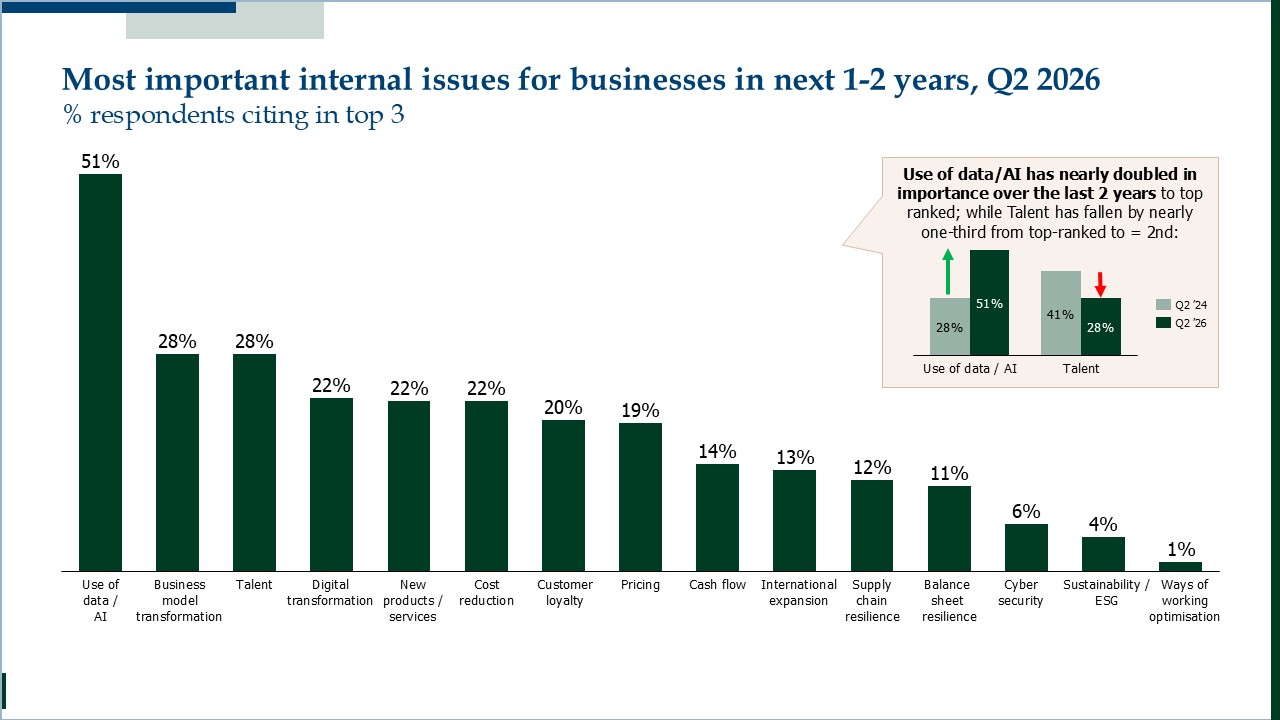
Optimising the use of data and AI dominates the list of top business priorities, with about half of our respondents (51%) identifying it as a top 3 issue. This is a sharp rise over 2 years, from 28% (and 4th place), replacing ‘talent’ as the top issue (which had dominated since Covid).
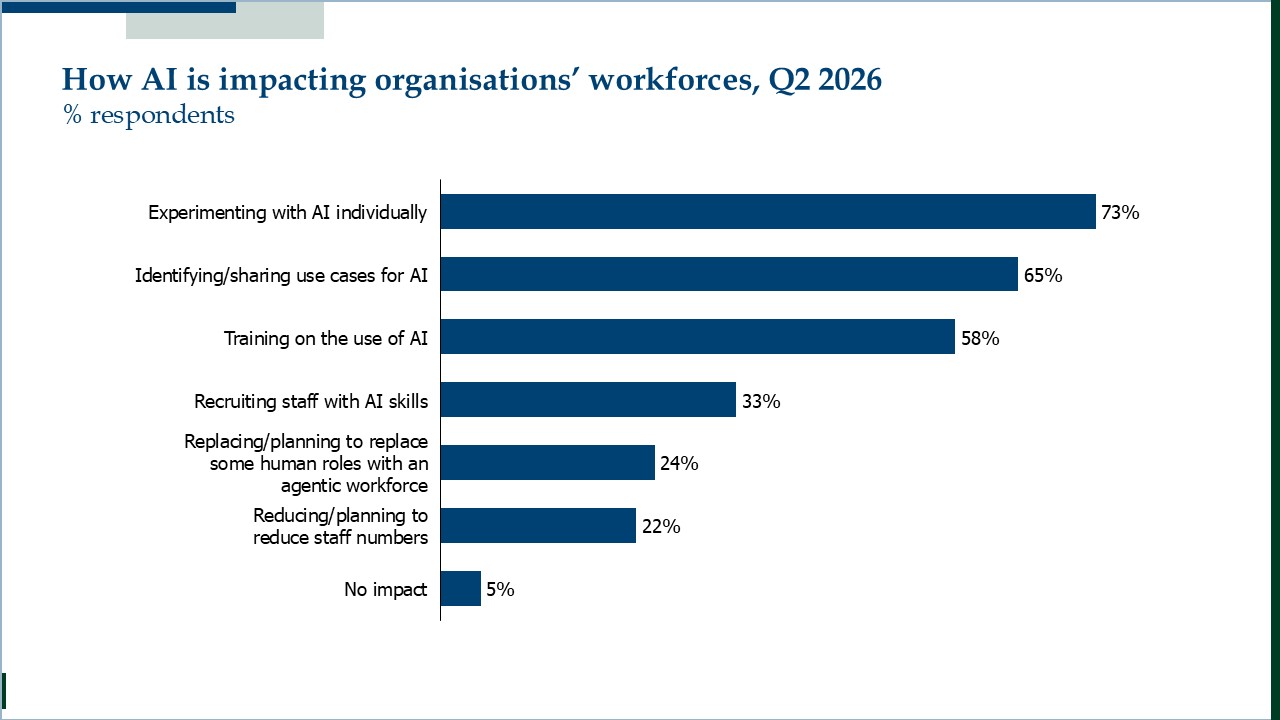
And AI is already having an impact on workforces. 73% of respondents said their employees are experimenting with AI; 65% said staff were identifying / sharing use cases; and 58% of businesses are training their staff in the use of AI. Of note, while smaller in numbers, but more significant potentially in its immediate impact on the workforce, 24% are replacing or planning to replace humans with AI agents/workers and 22% are reducing or planning to reduce staff due to AI.
…just unevenly distributed
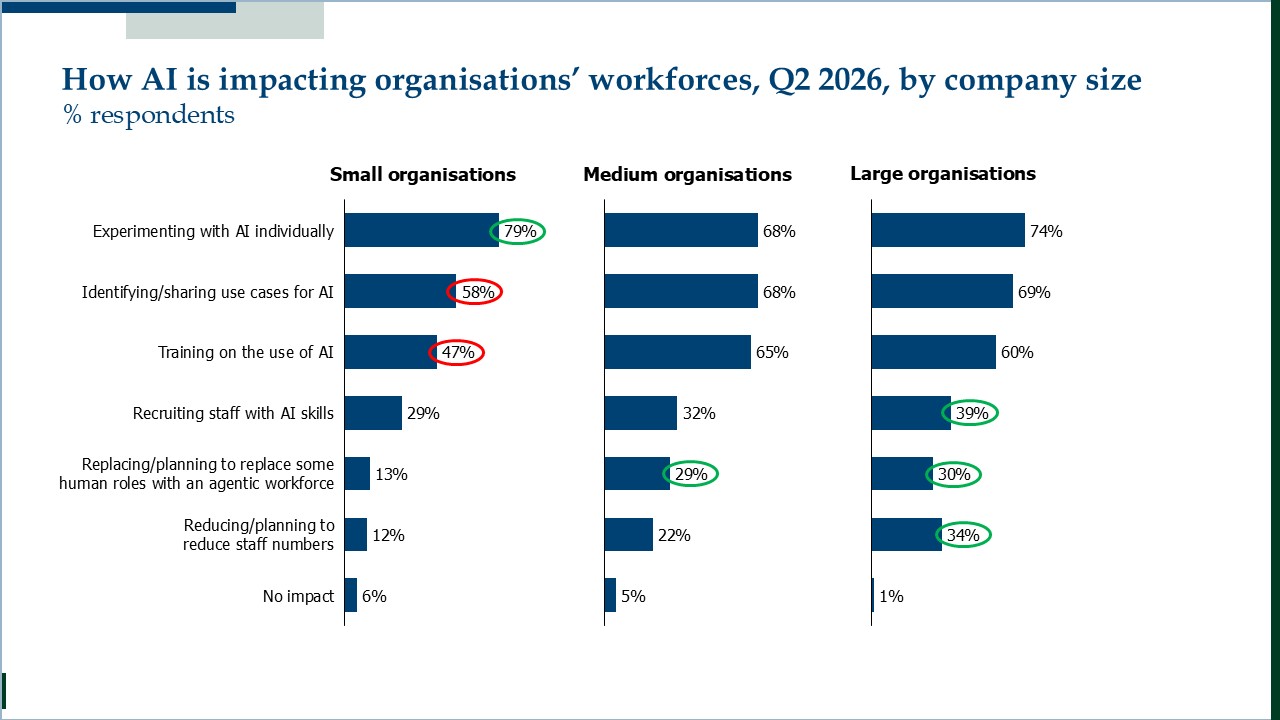
Individual experimentation with AI is seen at its highest rate in small businesses – 79% of them say that this is happening. But there is more training and sharing of use cases in medium-sized and larger firms. And large firms are home to the greatest amount of recruitment of staff with AI skills, as well as being most likely to replace staff with agentic workers and reduce staff numbers in the wake of AI’s introduction.
The first wave
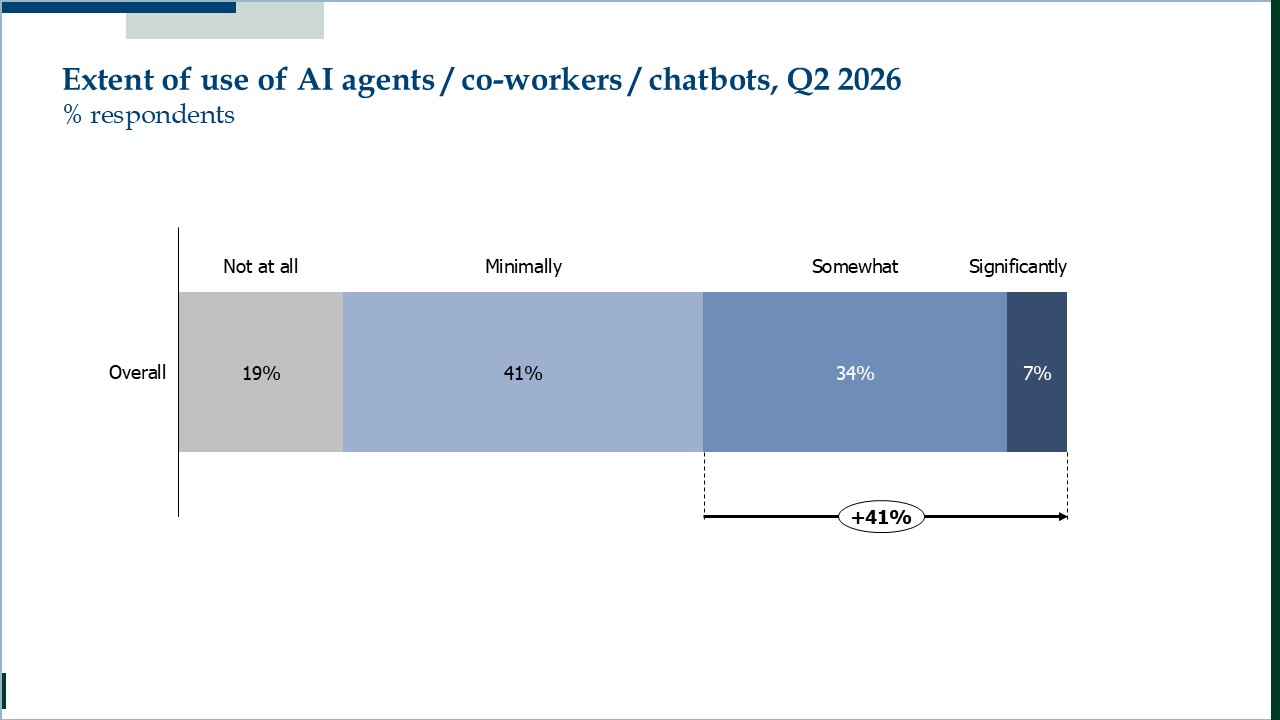
As for today, AI agents are already being widely used, though not deeply: 8 in 10 are using AI agents / co-workers, with half that number using them somewhat / significantly.
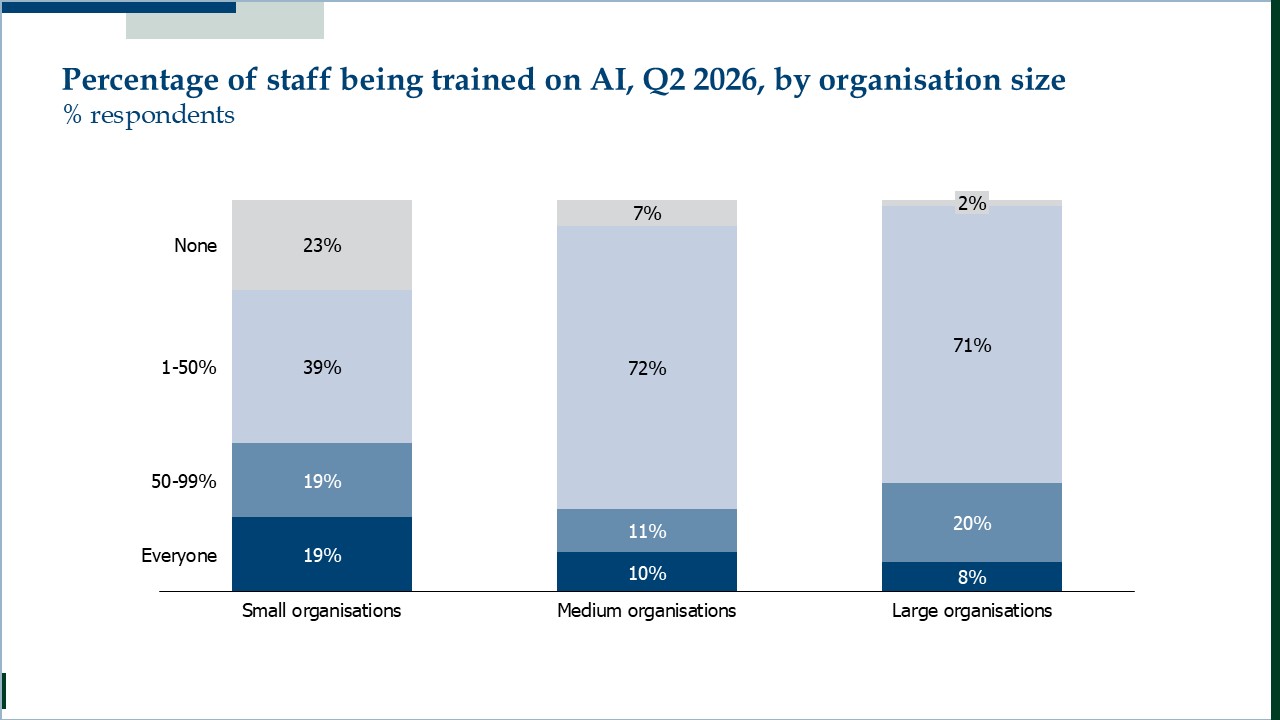
Investment in staff training on AI varies: around 60% train at least some of their staff, and half of these (c 30%) are training at least 50% of their staff. Smaller organisations are bifurcated on training: they are more likely to be training at least 50% of their staff on AI (40% are), but quite a large proportion of them – 23% – are offering no training at all.
On the horizon
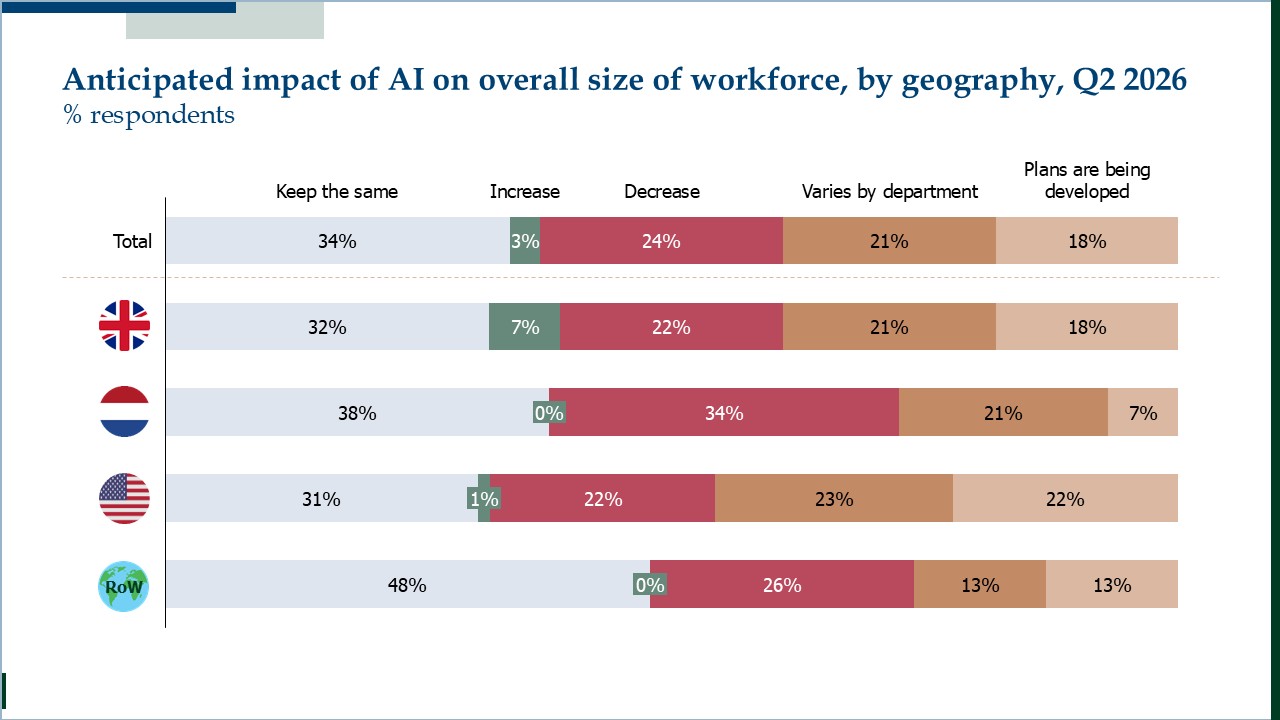
Two thirds of businesses expect some sort of impact on the size of their workforce due to AI. 24% think they will have fewer staff (and of that 24%, over half are already planning to recruit fewer staff this year). As many as 34% of Dutch business leaders expect a decrease in staff numbers.
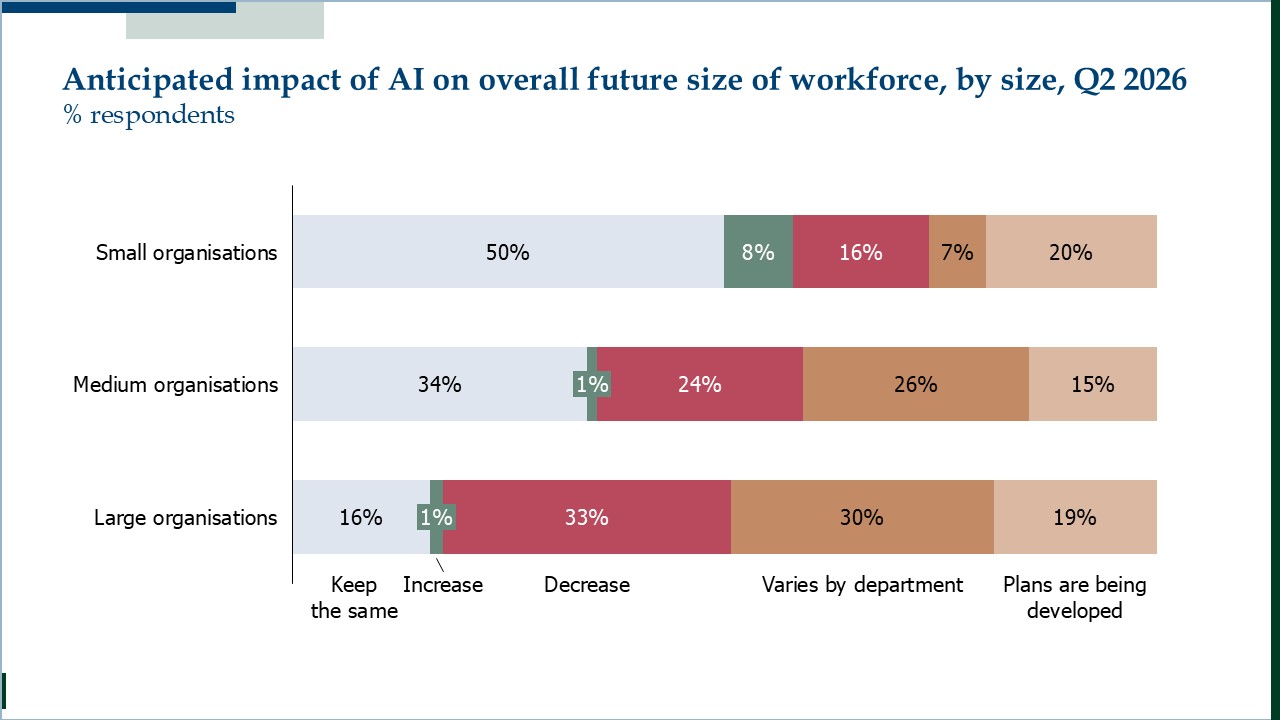
Smaller organisations are most likely to expect their future workforce to remain the same size (50% of them believe this), while larger organisations are more likely to expect decreases (33% of them say so).
The AI jobs crunch
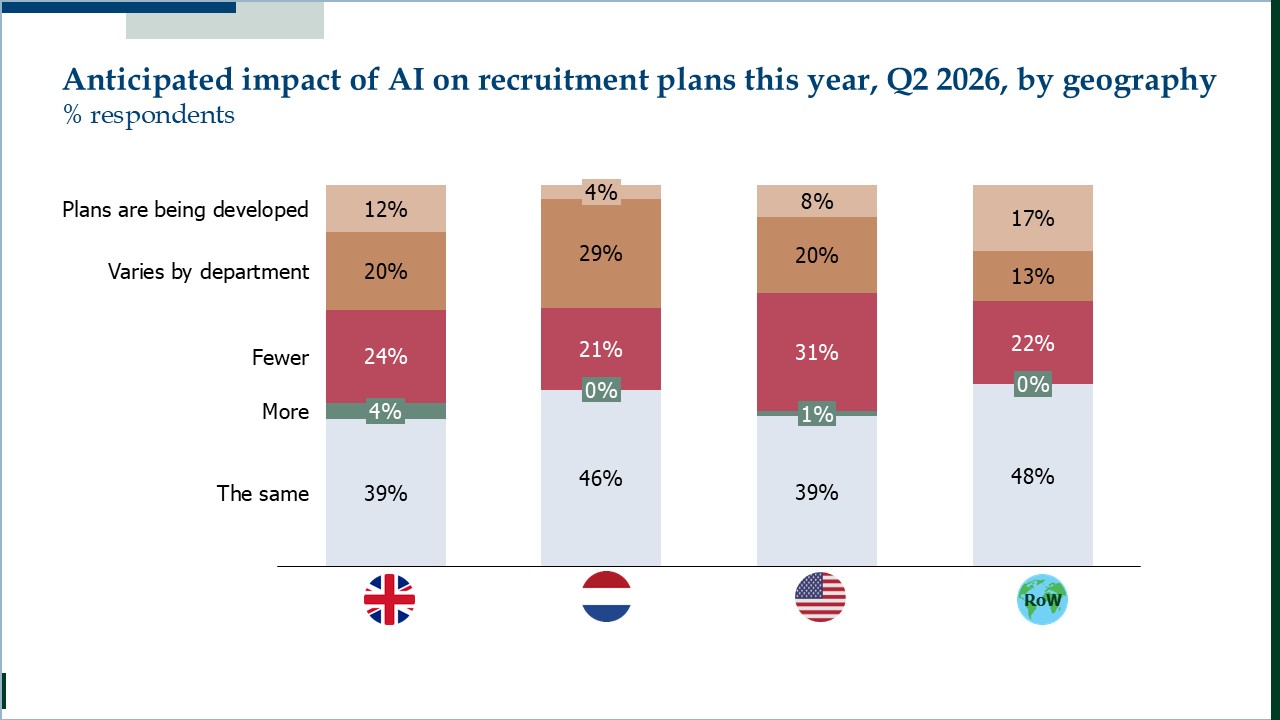
Perhaps this survey’s most startling finding is that, already, one in four organisations is expecting to recruit fewer staff this year because of AI. This tendency is seen at its strongest in the US. Overall, around 60% of our respondents are changing their recruitment plans this year because of AI.
The impact on recruitment this year is being felt most keenly by entry- or junior level staff, and in customer service and administrative support roles. But a range of other roles – operations, finance, marketing and comms – will also be affected.
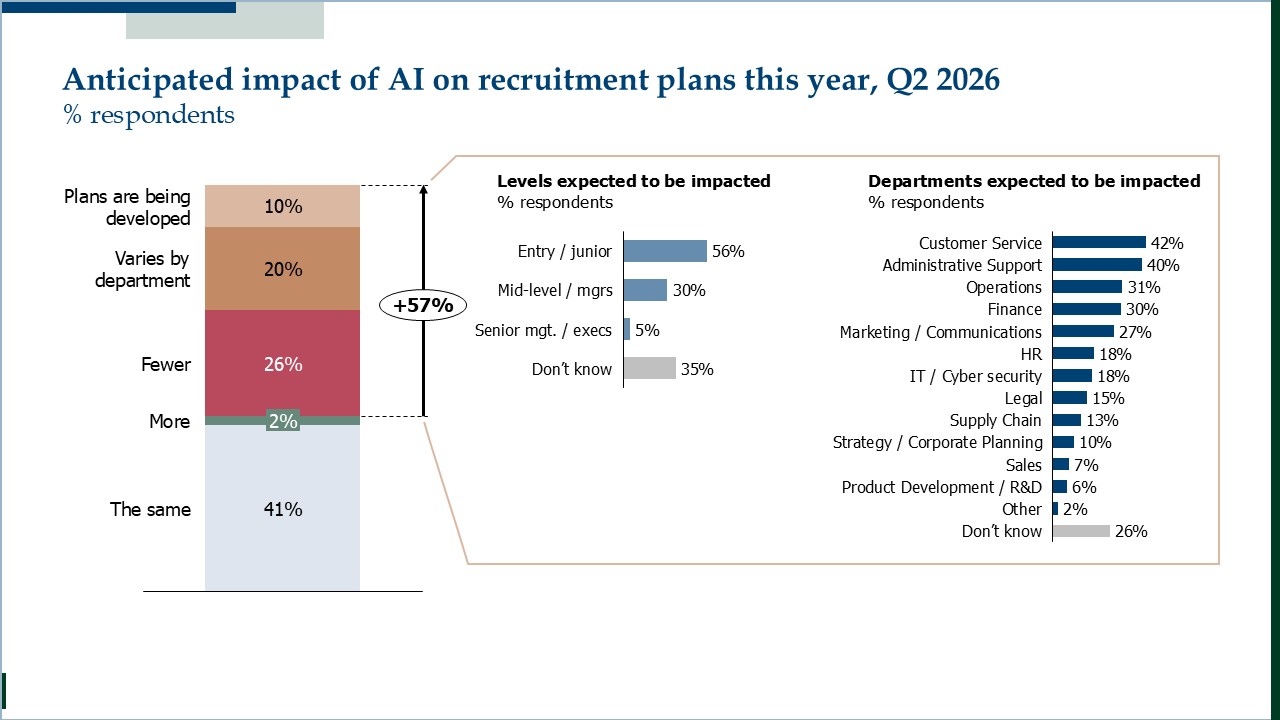
For those employers who are cutting their recruitment this year due to AI, just under half are expecting between a 1%-10% reduction, and a further one in three are reducing recruitment by more than 20%.
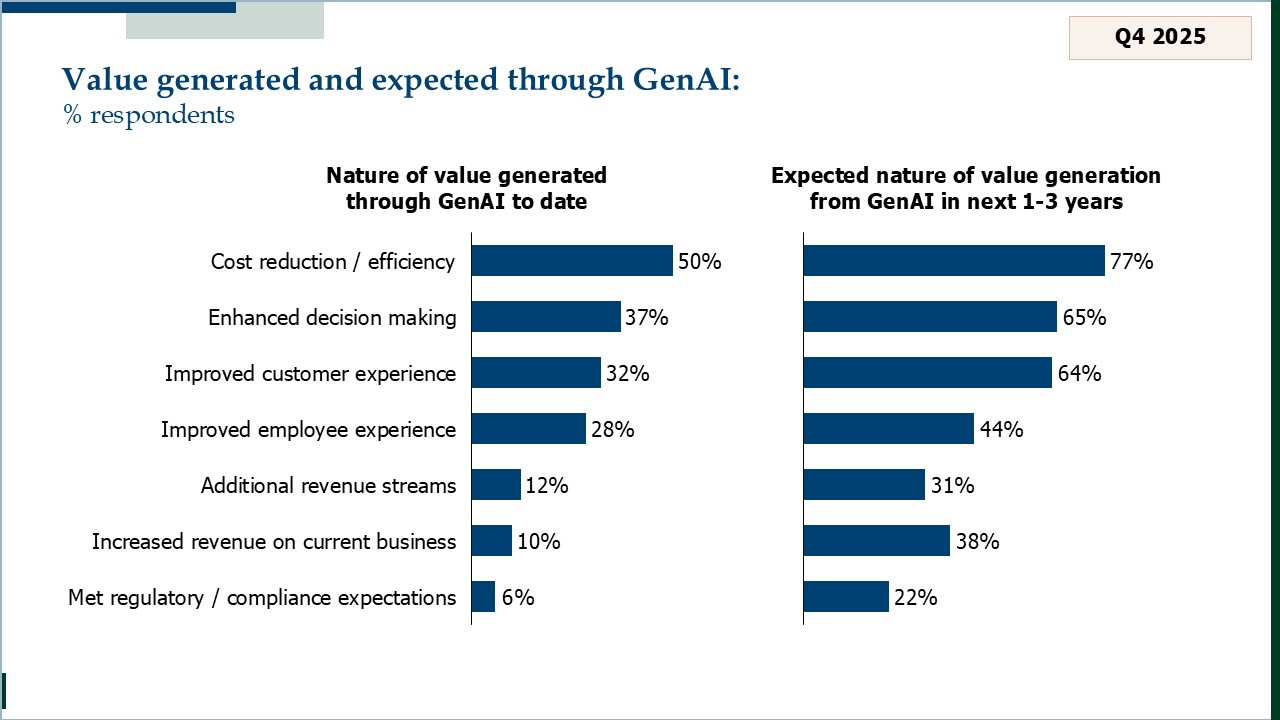
Dena McCallum, co-founder of Eden McCallum, points out the sequencing implied in the results of this and our November survey: business leaders are looking to AI for efficiencies before turning to growth. While 50% had already made cost/efficiency gains thanks to AI, only 12% had created new revenue streams and 10% had increased revenue in their current business. Looking forward 1-3 years, those expecting revenue uplift from AI are 2.5-4x more numerous: 31% expect it from new revenue streams and 38% from current revenue sources.
“Efficiencies may be the low hanging fruit,” Dena says, “but companies will need both to stay ahead. If they can do that, then the ‘jobs crunch’ might be temporary and soon followed by expansion.”
Click here for the full survey results.
Follow us on LinkedIn to remain updated.
*Eden McCallum’s semi-annual Economic and Business Outlook Survey was conducted from 17 to 24 April 2026 and in conjunction with HighPoint Associates.